
Combat
Confirmed (Press)Combat in Fatekeeper is weighty and reactive: read enemy patterns, parry and dodge, manage stamina, and chain strikes into dismemberments. Spells have physical interactions with foes and the environment.
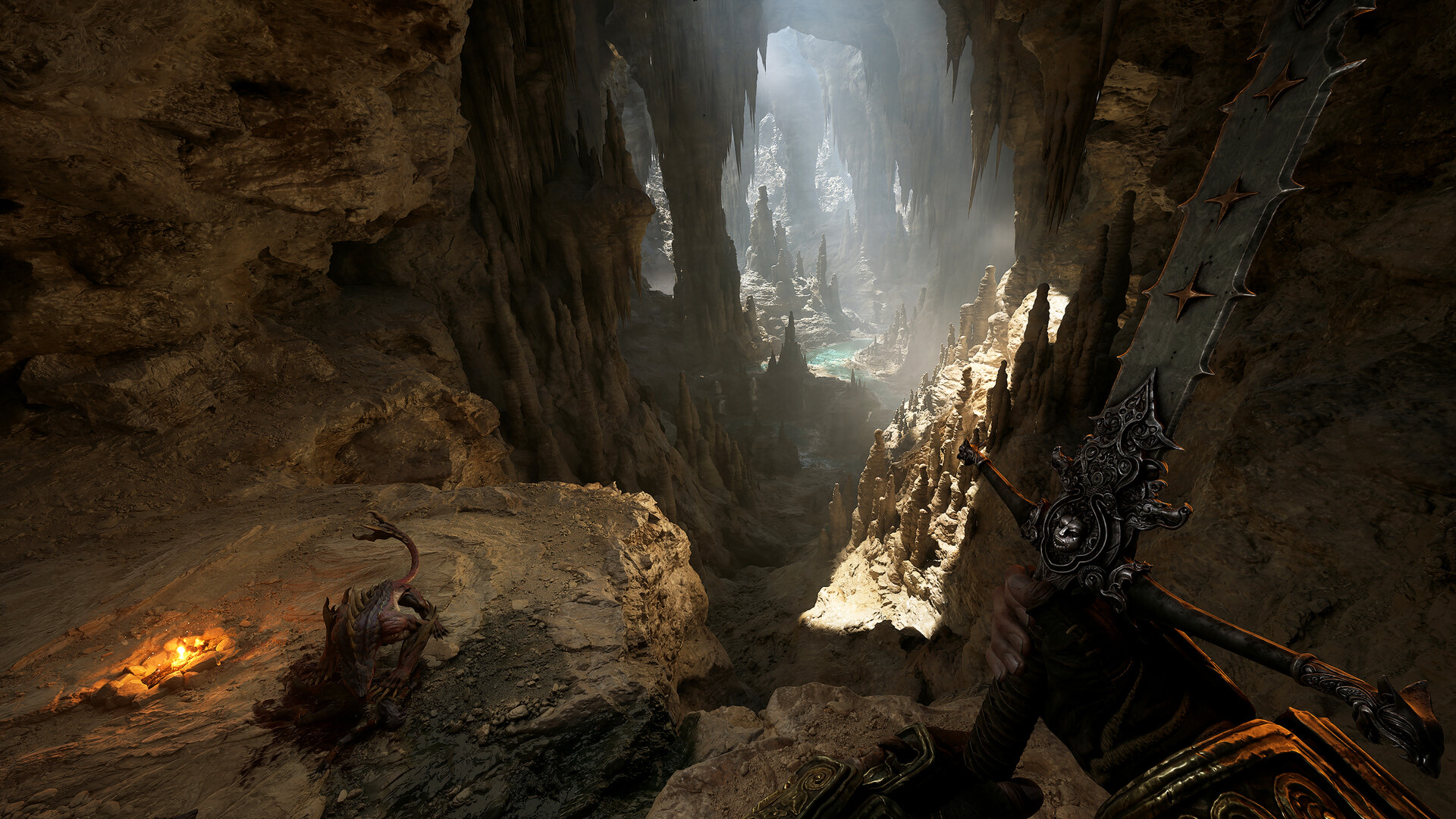
Combat is the heart of Fatekeeper, and it is the system the studio has shown off most. Paraglacial calls it “reactive melee combat” where “success demands both skill and preparation” — you read each enemy’s patterns, time your defense, and chain attacks into kills. Press who have seen it running describe weapons with real heft, a Soulslike sense of caution, and the fluid feel of a classic first-person brawler. If you have played Dark Messiah of Might & Magic, the comparison will feel immediate.
This page covers what is actually confirmed about the moment-to-moment fighting, and flags the granular details that come only from fan sources.
The core loop: read, react, commit
Every fight in Fatekeeper rewards patience. Enemies have “distinct patterns, strengths, and weaknesses,” and the game “focuses heavily on timing and reading enemy movements.” You are not meant to mash — you watch a wind-up, decide whether to block, parry, dodge, or interrupt it with a spell, and only then commit to your own attack. Press previews repeatedly liken the discipline to a Soulslike, but with the speed and first-person immediacy of an FPS.
Your build sets the tools you bring, but, as the developers put it, “so does how you wield it.” Two players running the same skills can fight completely differently depending on how well they manage spacing and timing.
Weight and reactivity
Reviewers who saw the eight-minute gameplay reveal singled out how “meaty” the swings look — “the heft of the weapons really helps showcase what the developer is going for in terms of combat feel.” Attacks carry momentum, so positioning and follow-through matter. This is deliberately not a twitchy, weightless hack-and-slash.
Defense: block, parry, dodge, and stamina
Fatekeeper’s defensive options are confirmed across official and press coverage:
- Block and parry-counter. Official store text calls out “fast, precise block-counters” — a well-timed block leads into a counterattack.
- Dodge. Press consistently lists dodging alongside parrying as the two ways to avoid incoming hits.
- Stamina. Outlets report you must “manage stamina carefully,” gating how aggressively you can attack, dodge, and defend.
Speculative — fan detail. Granular parry rules circulated by fan wikis — that there are no invincibility frames, that a perfect block staggers for a guaranteed critical riposte, or that a riposte animation can be canceled into a spell cast — are not confirmed by any official source. They are plausible and on-theme, but treat them as unverified until the game or a dev confirms them. The page infobox marks “stamina” itself as press-reported rather than first-party.
Offense: chaining, dual sets, and dismemberment
You can “chain sword strikes or axes into dismemberments.” Dismemberment is officially confirmed as a real mechanic — Steam’s mature-content descriptor lists “chance based body dismemberment” against “purely fantasy creatures.” It is chance-based, so it is a satisfying payoff rather than a guaranteed finisher on every hit.
The equipment system lets you carry two quickly interchangeable weapon sets, so you can swap between, say, a fast blade and a heavy hammer mid-fight to match the situation.
Physics and environmental kills
This is Fatekeeper’s signature hook and where the Dark Messiah lineage is clearest. Combat is physics-reactive, and the world is full of ways to kill that have nothing to do with raw damage:
- Kick or shove enemies off ledges or into spiked pits.
- Hurl heavy debris with telekinesis-style force.
- Shatter support beams to drop the environment on foes.
- Set up elemental combos: freeze an enemy solid and shatter them with a warhammer, or douse them in oil and ignite them with fire.
These interactions are where combat and magic blur together — see the Magic & Spells page for the spell side of the equation.
Early Access scope
The Early Access build exposes the core combat loop for the game’s first hours (about two hours of content), with the full game targeting roughly fifteen. Combat is the most complete system at launch, but some supporting mechanics expand over the planned ~18-month Early Access period.
| Action | Effect | Notes |
|---|---|---|
| Block / parry | Stop an attack; well-timed block leads to a counter | Confirmed (official) |
| Dodge | Evade an incoming attack | Confirmed (press) |
| Stamina | Gates attacks, dodges, and defense | Press-reported |
| Dismemberment | Chance-based sever on melee hits | Confirmed (official mature descriptor) |
| Environmental kill | Ledges, spiked pits, debris, falling beams | Confirmed (press) |
| Dual weapon sets | Swap two loadouts mid-fight | Confirmed (press) |
Frequently Asked Questions
Is Fatekeeper combat like Dark Messiah?
Yes — press repeatedly compares it to Dark Messiah of Might & Magic for its weighty, physics-driven first-person melee and environmental kills.
Is there dismemberment in Fatekeeper?
Yes. Steam’s mature-content descriptor confirms chance-based body dismemberment against purely fantasy creatures.
Does combat have invincibility frames on dodge?
Unconfirmed. Claims of "no i-frames" come from fan sources, not any official statement.
Sources
- Steam store — Fatekeeper (App 2186990) Confirmed (Official)
- RPGamer — EA date announce (timing/reading enemies) Confirmed (Press)
- Lawod — Soulslike-but-FPS, physics kills Confirmed (Press)