
Weapons & Equipment
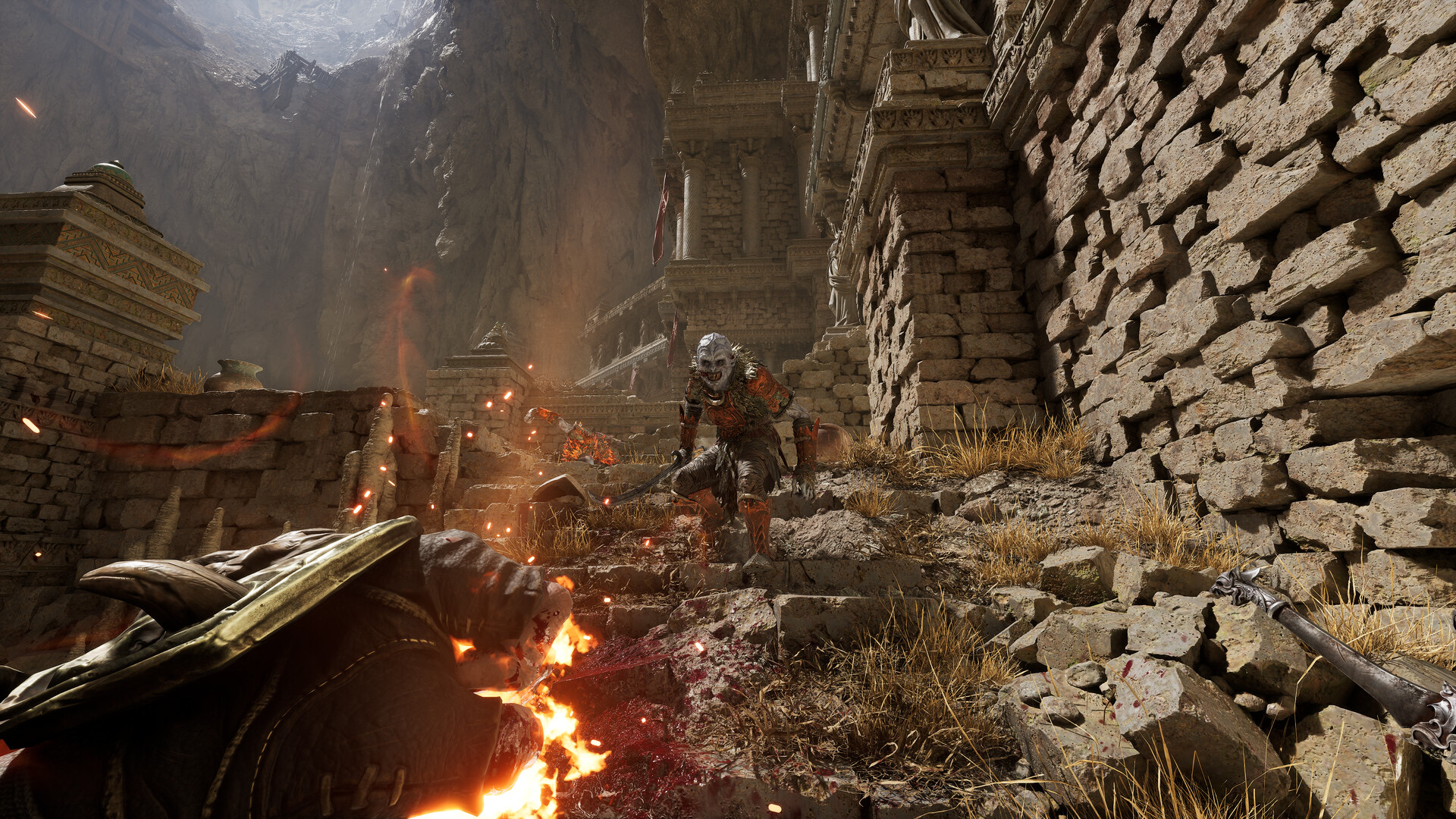
Confirmed (Press)Gear is looted, not crafted. You wield two swappable weapon sets and equip armor, a helmet, a necklace, and rings. Every item can be inspected to reveal hidden interactions.
Here’s the one thing to know before anything else: gear is looted, not crafted. You don’t build a sword at a forge — you find it out in a world built on ruins, inspect it, and slot it into your loadout. The right find can flip a fight; the wrong one gets you killed.
“Discover, loot, and master a wide variety of weapons, armor, and artifacts. Customize your loadout to suit your playstyle… Every item matters — and the right gear can be the difference between victory and ruin.” — Official site / Steam store
This page covers the weapon classes Paraglacial has actually confirmed, the equipment slots from the inventory screen, and — just as important — the fake weapon stats floating around that you should ignore.
Weapon classes
These are the confirmed weapon types, pulled from the weapons dev blog and the skill-tree dev blog. The Druid can wield all of them — “adept with blades, axes, and all kinds of melee weapons alike.”
| Class | Examples | Role | Synergy |
|---|---|---|---|
| Blades | Swords | Balanced, all-rounder melee | Chains into dismemberments |
| Axes | Axes | Heavy chopping damage | Big committed swings |
| Blunt | Maces, hammers, clubs | Crowd-control and shatter | Crush frozen enemies (the Shatter perk) |
| Daggers | Daggers | Rapid, dashing strikes | Leaping attacks; ranged throw |
Two confirmed details are worth calling out:
- Blunt weapons + ice = shatter. The “Shatter” skill “allows you to crush frozen enemies when using blunt weapons (maces, hammers, clubs).” Freeze a foe with Cryomancy, then break them with a hammer.
- The returning thrown dagger. A dagger build “enables a ranged dagger throw that returns to the player like a boomerang.” That’s the one confirmed ranged-melee option — a thrown weapon that comes back to your hand.
Staves are implied for spell-focused builds, and previews mention spears, but those aren’t nailed down in a primary source the way the classes above are. For how these weapons feel in a fight — weight, parries, finishers — see Combat.
Equipment slots
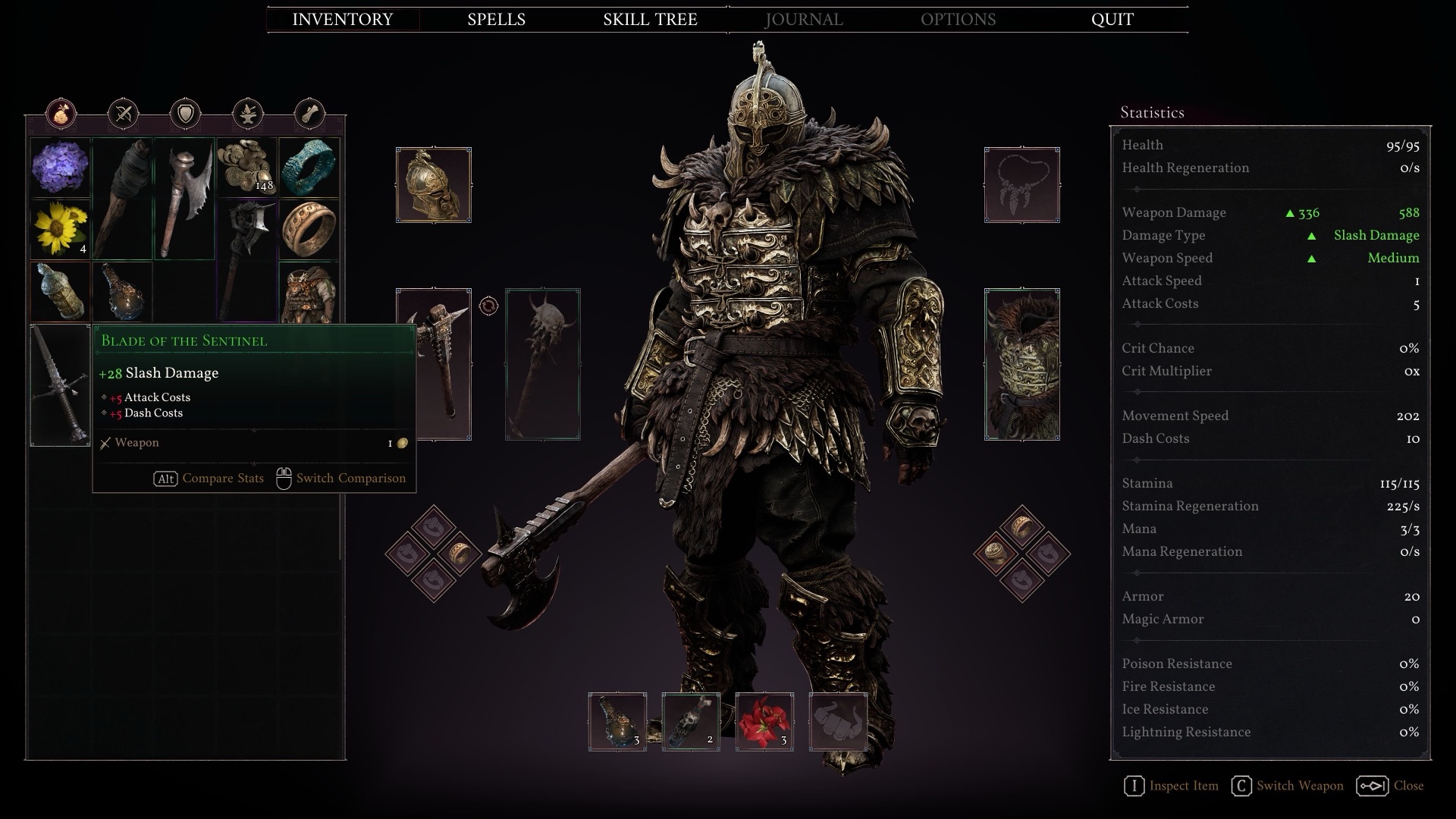
Fatekeeper’s inventory works like an action-RPG loadout. The cleanest description comes from a hands-on preview of the actual equip screen:
“In addition to two quickly interchangeable sets of weapons, we equip the character with armor, a helmet, a necklace, and rings, and we also pick up potions and weapon oils.” — gamepressure preview
So your confirmed slots are:
| Slot | What goes there |
|---|---|
| Weapon set A / B | Two swappable loadouts you flip between mid-fight |
| Armor | Body armor |
| Helmet | Head |
| Necklace / amulet | One neck slot |
| Rings | Jewelry (multiple) |
| Consumables | Potions and weapon oils/vials |
The two swappable weapon sets are the standout feature — you carry two loadouts and switch on the fly, so a build can pivot from, say, a sword-and-board setup to throwing daggers without opening a menu. Jewelry (rings, necklace) is also where stat bonuses tend to live.
Relics & artifacts
Beyond raw weapons and armor, you find relics and artifacts — items “tied to ancient traditions, each with its own identity and history.” Previews describe these as build-defining: “discovering and equipping relics scattered throughout the world… fundamentally alter how players approach challenges.” Loot isn’t a flat stat stick — items carry “unique properties” that can reshape your playstyle, the “god-roll” hunt that drives experimentation. (That last framing is from previews, so treat exact behavior as preview-level, not in-game-confirmed.)
Inspect everything
Every item can be examined up close, and this isn’t just flavor — inspecting items can unlock hidden mechanics.
“Weapon and armor will support a wide variety of playstyles, and inspecting items can even unlock hidden mechanics.” — official gameplay-reveal caption
“Every item can also be examined up close — flavor text, subtle visual details, and hidden interactions help flesh out the lore and reveal more than what’s immediately apparent.” — Weapons & Relics dev blog
Practical takeaway: when you pick up something new, open the inspect view before you dismiss it. The tooltip isn’t always the whole story.
Gear also ties into other systems. A consumable-focused build “improves alchemy results, increases consumable duration, adds a chance not to consume items on use, and scales their effects based on the number of consumables carried” — and there are “many synergies between item effects and other game systems (such as crafting).” Your weapon oils and bombs come from Alchemy: combine three ingredients into potions, weapon vials, or thrown bombs.
Rarity
Community summaries of official material point to a rarity range “from basic junk items to epic gear,” with “bonus stats on armor, weapons and jewelry.” That lines up with the official “every item matters / customize your loadout” framing, but the exact rarity tiers haven’t been published first-party — so take specific tier names with a grain of salt.
What’s been faked — ignore these
This is the part the content farms get wrong, so read it carefully. Fatekeeper has not published per-weapon stat tables, weapon names, or an upgrade system. Anything claiming otherwise is invented:
- Named weapons with exact damage — e.g. “Mercenary’s Raw Axe — 145 base damage,” “Iron-Bound Mace,” “Serrated Twinblades.” All fabricated. No official source lists named weapons with numbers.
- An A–E scaling and upgrade system — “Glimmering Shards,” “+0 to +3 upgrades,” “Whetstones,” durability/“Damaged” status. None of this exists in confirmed material. It’s content-farm SEO bait.
- A “boots” slot and specific artifact effects — one fan wiki invents a boots equipment slot and made-up artifacts (“a ring that makes fire spells apply frost,” “boots that leave a trail of slowing ice”). The confirmed slot list above has no boots slot, and those artifact effects are unsourced.
The honest state of things: confirmed weapon classes and equip slots, yes. Confirmed weapon names, numbers, and upgrade mechanics, no. We’ll fill in real specifics as Paraglacial reveals them during Early Access. To turn these weapons into a working character, head to Builds.
FAQ
What weapons are in Fatekeeper? Confirmed weapon classes are swords (blades), axes, maces, hammers, clubs, and daggers — including a thrown dagger that returns like a boomerang. Staves and spears are implied but less confirmed.
Can you craft weapons in Fatekeeper? No. Gear is looted, not crafted. You find weapons, armor, and artifacts scattered through the ruined world. Alchemy lets you craft weapon oils and bombs, but not the weapons themselves.
How many equipment slots does Fatekeeper have? Confirmed slots are two swappable weapon sets, armor, a helmet, a necklace, and rings, plus consumable slots for potions and weapon oils.
Is there a “Mercenary’s Raw Axe” with 145 damage? No. That weapon and its stats are fabricated by a content-farm page. Fatekeeper has not published any per-weapon damage numbers or named-weapon stat tables.
Does Fatekeeper have weapon upgrades or durability? No confirmed upgrade or durability system exists. Claims about “Glimmering Shards,” “+3 upgrades,” or a “Damaged” status are invented and not in official material.
Why inspect items? Inspecting an item can unlock hidden mechanics and reveal interactions the tooltip doesn’t show. Always check the inspect view on new gear before writing it off.
| Class | Examples | Role |
|---|---|---|
| Blades | Swords, greatswords | Balanced melee |
| Axes | One- and two-handed | Heavy chops |
| Blunt | Maces, hammers, clubs | Shatter frozen foes |
| Daggers | Paired blades | Rapid, throwable |
| Spears / Throwing | Reach + ranged | Spacing, lobbed |
Sources
- Steam store — Fatekeeper (App 2186990) Confirmed (Official)